Pandit for Last Rites in Andheri Mumbai – 9821325544 – Book Now
Book Arya Samaj Mandir Services | Contact @ +91 9821325544 | Serving Since 2017
The largest online Platform to Book Pandit for Last Rites in Andheri Mumbai. It is for Hindu funeral death rites and rituals. We offer Pandit ji for Hindu funerals, 4-day and 13-day puja, Antim Sanskar, and last rites. To arrange for last rites in Andheri, Mumbai, contact our helpline or use our completed “Booking Form.”
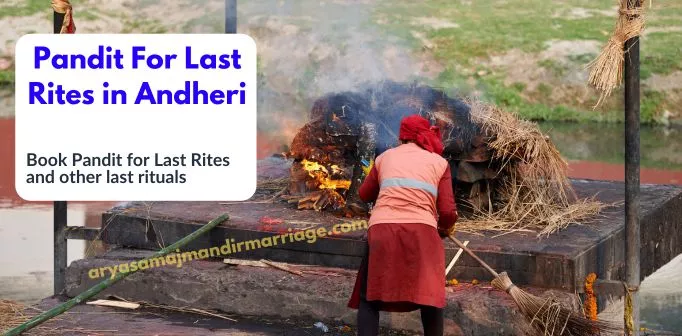
Funeral Services for Hindus in Andheri Mumbai
According to Hinduism, the Antyesti Sanskar (Last Rites) is the human being’s final sanskar. There is no longer any sanskar or ceremony for any human being after this. In all religions, the body of the deceased must be disposed of. By sacrificing a sizable amount of ghee and havan samgri in addition to burning the body on a wood fire, Arya Samaj accomplishes this. For this Antyesti Sanskar, the procedure is carried out similarly to a Yagya, with the chanting of particular Vedic mantras.
Arya Samaj considers cremation the most appropriate method for disposing of a human body. Other methods, such as burial in the ground or immersion in rivers, create pollution and harm the environment. Therefore, people should cremate every human body using this method.
During cremation, people burn ghee and samagri in sufficient quantities to reduce unpleasant odors and minimize negative environmental effects. Even without ghee and samagri, cremation remains the most suitable and hygienic option.
Family members should perform a Yagya at the deceased’s home to purify the surroundings and create a peaceful environment. After cremation, they can collect the remaining bones from the site. However, they should avoid immersing these remains in rivers, as this practice pollutes water bodies and harms the ecosystem.
How long does it take the soul to transition into a new body?
Many people ask this question frequently, but the idea behind it is incorrect because no one knows whether the soul will return to its previous body. God creates all bodies and remains aware of every soul. Just as death follows a predetermined path, life after death also follows a defined process.
According to Vedic teachings, the soul does not take much time to obtain a new body after death. The sages explain that the soul quickly moves forward in its journey and enters a new form based on divine law.
Vedic funerals (Antim Sanskar) only last four days.
When a loved one passes away, the family should first give the body a clean bath. If taking a bath is not an option, then use a cotton cloth to wash your entire body in lukewarm water. After cleansing or bathing, Place a dead body on a mat and place it on the ground, being sure to position the dead body’s head in the north and its feet in the south.
Make a paste with 250 grams of sandalwood powder. Apply the paste evenly on the body of the deceased. all over the body, after which to embellish it with lovely attire. Once the Ganga water process was over, Saiya put the basil in his mouth and brought him to his death. Even in this location, the deceased body’s head is facing north and its legs are facing south. Make sure the deceased body is securely fastened with ropes to prevent any issues during transportation. After attempting it, all of the family members and other guests present take flowers and garlands in their hands and lay a wreath on the deceased person while pleading with God the Father for peace and the salvation of the heavenly soul. The last trip begins with the Gayatri mantra.
As per Panditji’s directions, properly complete the funeral procession using ghee and other components while chanting Vedic mantras.
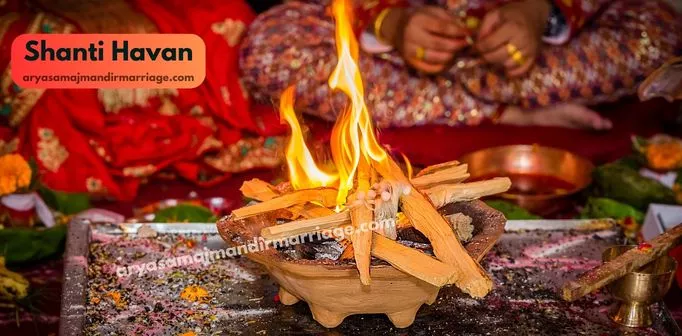
Rituals after Antyeshti Sanskar in Andheri
After completing the last step of the method, before dusk on the same day, place a photograph of a deceased person inside the home with their face facing south. Next, place a white cloth on the table, add a large lamp filled with ghee, and light the lamp. This lamp will regularly be lit for four days.
Along with this, you will also be finish here on the second, third, and fourth days along with the Yajna process, as per Panditji’s directions. Panditji will keep you updated on this periodically.
Puja Samagri List for Last rites in Andheri
You must arrange the following materials on the day you complete the Mukhagni ritual.
- 1 kilo of cow ghee
- 250g of sandalwood powdered.
- 100 g of camphor with Gangajal.
- A sandalwood bundle ( Pencil type )
- Prepare flower bouquets and garlands for Puspajali.
The amount of ghee and camphor required for Agni Sanskar on an electric fire will be 1 kg and 50 grammes, respectively.
You can obtain all the required puja materials, including bamboo, a small pot filled with mud, and other essential items, from shops that sell funeral ritual supplies. You should visit the shop and arrange items such as a large clay pot, a small clay pot, dry cow dung, shroud cloth, and rope for tying the bier (saiyya).
The person performing the rituals must wear appropriate traditional clothing. He should wear either a white kurta-pajama or a white dhoti with a baniyaan to maintain purity during the process.
In addition, the family performs rituals at home for the next two days. Therefore, you should prepare all the necessary materials in advance for the following day’s worship.
- one flower every day.
- 1 kg of pure cow ghee
- 250 gm of black sesame
- Basil and sugar candy for Prashad.
Other crucial post-death steps
By the way, there are numerous practices or traditions associated with funerals that are common in society. It is up to the reader to determine how much these relate to religious texts. Whoever you decide to ask for information from in this regard—a priest or an Older member of your family—is who you should ask.
You will hear examples of everyone’s traditions and practices. But figuring out the truth might be very challenging. Here, we’ve attempted to provide answers to some crucial funeral-related inquiries that will undoubtedly aid you in discovering the truth.
Asthivisarjan
Osteogenesis is frequently practised in the Ganges river, its tributaries, the sea, etc. However, it is advisable to follow the Bible’s instructions underground. River water becomes contaminated as a result of bone immersion. If the river is polluted, neither people nor other animals will benefit from it. Even if we usually labour in a way that benefits ourselves, nature. Therefore, if it is possible, you can execute bone immersion by excavating a pit on your property at your ancestral home, executing the puja ritual in the proper manner, and planting a lovely tree nearby. Because you will always be attached to that tree, you will take extra care to build it completely.
Where this tree will develop and become helpful for millions of people,then for you it will be the symbol of your lover and the centre of adoration.
This practice always helps you maintain a strong connection between your descendants and your ancestral roots. It also ensures that your family’s heritage and inherited values remain protected for future generations.
Pindadan and Tarpan
People often perform pind daan and tarpan with the belief that these rituals free the soul. However, the soul separates from the body at the time of death. After cremation, the fire completely consumes the physical body, so people should not worship the body after the final rites.
At this stage, the focus shifts to the soul, which continues its journey beyond the physical world, even though no one can directly perceive it.
Because of this, any fanaticism and superstition involved in this process of worship were created for the soul itself. Who is the PindDaan if the Vedas are correct and the soul has a new existence as soon as it departs from the body based on the actions that God has already planned for it?
Pindadaan is for the soul, and only if it has the means can the soul gain anything or anything connected to nature. She is unable to obtain any items or substances related to nature without methods. Why are you using this Pinddan, Sayadan, Jalanjali, and Tarapan if you have destroyed the means?
Brahmins Bhojan
The multidimensional afterlife is not supported by the Vedas. Our society’s intellectual class is currently protesting against this horrible behaviour carried out in the name of religion. After death, there is no mention of multi-Brahmi n meal anywhere.
If any scripture had specified a fixed number, people would have followed that list and arranged meals for Brahmins accordingly. However, no such fixed number exists. In practice, families choose numbers like 5, 11, 13, or 21 based on their capacity and willingness, and they offer meals to Brahmins accordingly.
I ask those who perform the multi-Brahman meal after death, aware that the deceased soul would get merit from this job, to also provide food for food at this orphaned ashram, old age home, cowshed, etc., which is a thousand times more virtue than performing the multi-Brahman food. It is also scriptural to provide in order to gain merit.
Pandit for Last Rites in Andheri – Packages & Pricing
Basic Antim Sanskar (₹2,100 – ₹3,500)
- Pandit for Mukhagni & Cremation Ritual
- Essential Vedic Vidhi
- Quick Arrangement Support
Complete Last Rites (Day 1 ₹3,500 – ₹6,500)
- Full Antim Sanskar Vidhi
- Step-by-Step Guidance
- Samagri Assistance
3rd / 10th / 12th / 13th Day Rituals (₹4,500 – ₹9,500)
- Dashgatra / Tehravi Vidhi
- Pind Daan & Tarpan
- Pitru Shanti Ritual
Brahman Bhoj / 13vi Arrangement (₹7,500 – ₹15,000)
- Pandit + Brahman Arrangement
- Full Ritual Setup
- Guidance for Family
Complete 13-Day Ritual Package (₹15,000 – ₹35,000)
- All Rituals Covered (Day 1–13)
- Dedicated Pandit Support
- Complete End-to-End Assistance
Why Families Trust Our Service in Andheri
- Verified & Experienced Pandit
- Same-Day & Urgent Booking Available
- Complete Ritual Guidance
- Support During Difficult Time
- Available Across Andheri & Mumbai
Important Note
Prices may vary depending on:
- Exact location in Andheri
- Type of rituals & customization
- Number of pandits / brahmans
- Samagri inclusion
- Urgent or same-day requirement
Final price is confirmed after understanding your exact needs.
Hire a pandit in Andheri, Mumbai for the last rites
At the lowest price in Andheri, Mumbai, a knowledgeable, trustworthy Pandit will be at your house. You can also specify using our services whether you want to Book Online Pandit for Hindu Antim Sanskar vidhi Last Rites or first death anniversary rites in Andheri, Mumbai. To hire knowledgeable pandits in Andheri, Mumbai for PanditJi’s Antim vidhi Hindu funeral ceremonies and Death ritual services, click “Book a pandit,” give us a call, or send us an email. 13 days in Andheri, Mumbai and 4 days there.

FAQ About The Pandit for Last Rites in Andheri, Mumbai.
Who may perform the Mukhagni procedure?
The Vedas grant equal rights to all human being. Family members of the deceased, including sons, daughters, parents, and siblings, can perform the rituals. If no family member is available, any responsible person can carry out this sacred duty.
Which way should the dead body face during the Mukhagni procedure?
The head should be pointing north, and the feet should be pointing south. This is known as Dakshinabhimukh.
What steps must be taken to prepare food at home after the Agni Sanskar?
After the Agni Sankar rites, you can prepare a normal meal at home, according to Vedic tradition.
How many days are required for Mundan Karma?
There is no similar structure in the Vedas.
Our Other Services in Andheri, Mumbai
- Arya Samaj Marriage
- Arya Samaj Pandit Ji
- Pandit For Puja
- Pandit For Marriage